
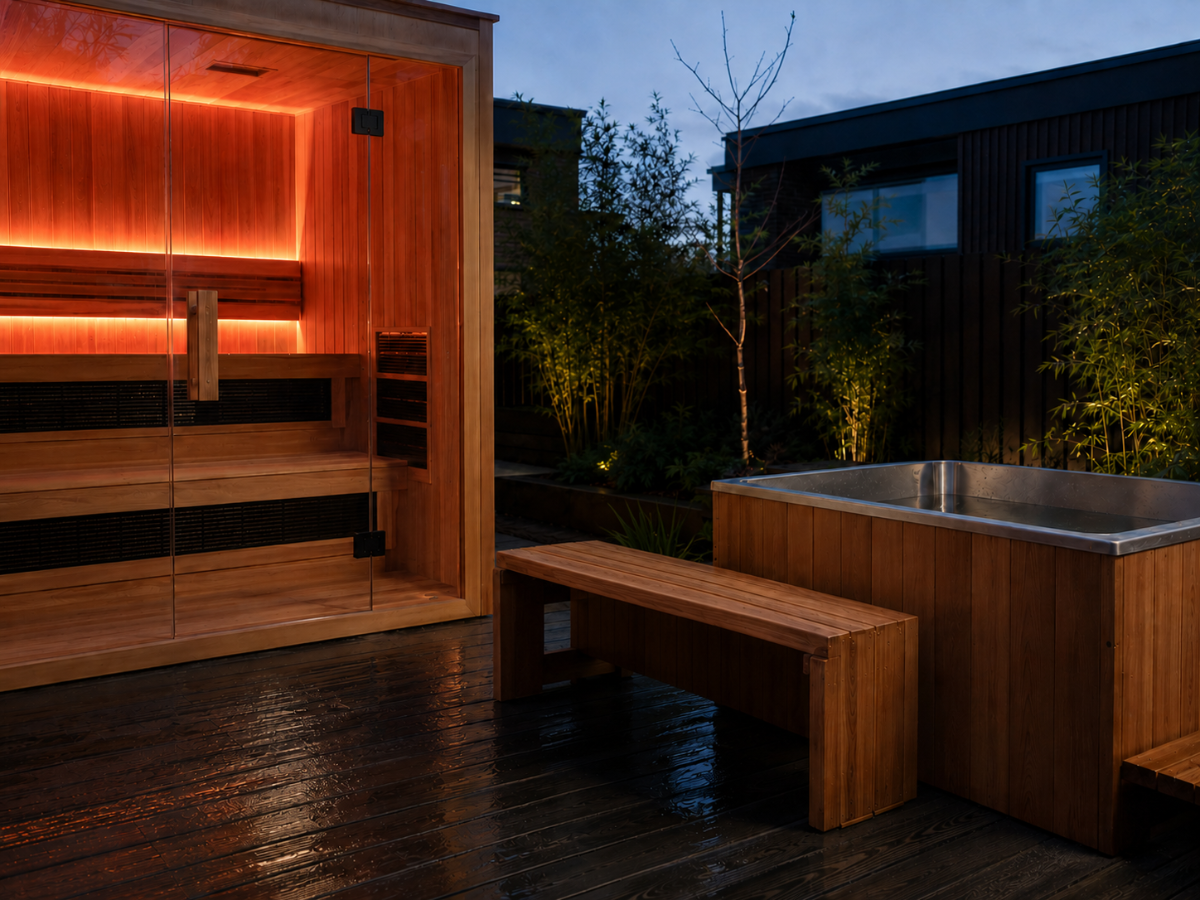
There is a reason the sauna and the cold plunge keep turning up side by side. Long before either had a name, the pattern was the same the world over: warm the body, then cool it, then rest. Contrast therapy is simply the modern label for that old rhythm, moving between heat and cold in one session.
The appeal is easy to feel and hard to explain in a single line. The heat is enveloping and slow. It gives the body somewhere to be still. The cold is the opposite, sharp and immediate, the kind of thing that clears the mind whether it wants clearing or not. Moving between the two, and then sitting quietly afterwards, is a ritual people return to because of how the whole sequence feels, not because of any one part.
How a contrast session usually runs
Most people settle into a loose pattern rather than a strict formula. A spell in the warmth first, unhurried, until the body has properly softened. Then a shorter time in the cold. Then a pause, dressed and warm again, before deciding whether to repeat it. Some do a single round. Some do two or three. There is no correct number, and the right length is the one that feels good rather than heroic.
The order matters less than the habit. What people tend to value is the contrast itself and the stillness that follows, the few minutes at the end where there is genuinely nothing to do.
Building it into a home
The reason contrast therapy has moved into homes is convenience. A ritual you have to book, drive to and share is a ritual you do occasionally. One that waits at the end of the garden or in a spare room is one you actually keep. That is the whole case for owning the two together rather than visiting them.
Practically, it needs less space than people expect. An indoor infrared sauna fits a spare room or a corner. A cold plunge can sit on a patio or a deck. Placed near each other, the two become a single setup rather than two separate projects.
If any of this is new, the simplest way in is to start with one and add the other later. Many people begin with the sauna, because the warmth is the easier habit to build, then add the cold once the routine is established. Others start cold. Neither is wrong.
A note worth making plainly: heat and cold are strong sensations, and everybody meets them differently. Build up gradually, listen to how you feel rather than how long you think you should last, and if you have any health concerns, speak to a doctor before starting.


Leave a comment
This site is protected by hCaptcha and the hCaptcha Privacy Policy and Terms of Service apply.