
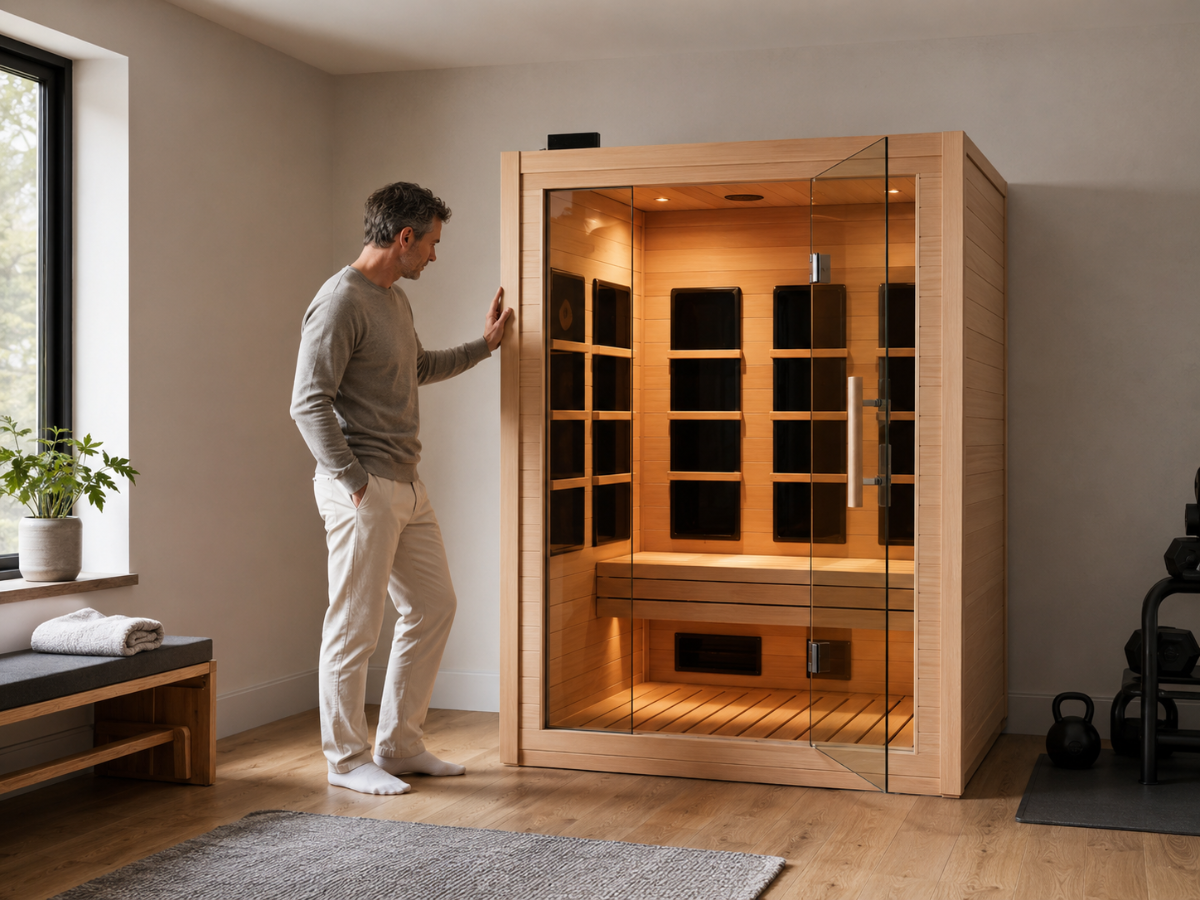
Choosing a sauna sounds more complicated than it is. Strip away the noise and it comes down to four honest questions: where it will go, how many people will use it, how it will be powered, and how it is built. Answer those and the choice more or less makes itself.
Where will it go?
Start with the space, because it rules out more than anything else. An indoor cabin needs a footprint in a spare room, a garage, a home gym or a large bathroom, and a clear path to get it there. An outdoor cabin needs a level base, room around it, and a nearby power supply. Measure the space before you fall for a model, and remember to account for the door opening and a little clearance around the cabin.
How many people?
A one-person cabin is the private option and fits almost anywhere. A two-person suits most homes and gives room to share or to stretch out alone. A four-person is the shared, sociable size, and the one people grow into if the sauna becomes a regular thing for the household. Be honest about how you will really use it. A single seat used daily beats a large cabin used rarely.
How is it powered?
This is the detail people skip and later regret. Many indoor infrared saunas run from a standard UK socket, which makes installation simple. Larger cabins and most outdoor saunas draw more power and can need a dedicated electrical supply fitted by an electrician. Always check the exact electrical requirement of the specific model before you buy, and factor any installation cost into the decision.
How is it built?
Look at the wood, the glass and the heaters. Solid timber, a proper tempered-glass door and evenly placed heaters are the things you feel every session and that last for years. Outdoors, the wood matters even more, since it has to stand up to weather. A cabin is a piece of furniture you keep for a long time, so it is worth choosing one built like it.
A last word on expectations
Infrared cabins warm the body directly and usually run at a lower air temperature than traditional saunas, so the experience is gentler than the very hot, steamy sauna some people picture. Performance varies between models, so always read the specification and follow the guidance supplied with yours. And as with any heat, build up gradually and speak to a doctor first if you have any health concerns.


Leave a comment
This site is protected by hCaptcha and the hCaptcha Privacy Policy and Terms of Service apply.